
This post contains affiliate links.
When you buy something using these retail links, we may get a commission.
For years, wellness has seemed to move in one direction: more.
More steps. More protein. More supplements. More strength training. More sleep tracking. More skincare ingredients. More cold plunges. More meditation. More biomarkers. More morning routines.
And, increasingly, more devices to tell us whether we’re doing all of those things correctly.
Even relaxation can start to feel like a project.
You don’t just sleep anymore. You track your sleep score.
You don’t just exercise. You monitor your recovery.
You don’t just eat lunch. You think about protein, fiber, calories, blood sugar and whether the meal contains enough of whatever nutrient is currently trending.
You don’t simply have a bad night’s sleep. You wake up to a red circle telling you that your “readiness” is low.
At some point, wellness can start feeling suspiciously similar to work.
And that is where the anti-optimization wellness trend comes in.
Rather than trying to squeeze the maximum possible benefit out of every part of life, this emerging approach asks a much simpler question:
What if feeling well doesn’t require constantly measuring and improving yourself?
What Is Anti-Optimization Wellness?
Anti-optimization wellness isn’t really about doing nothing.
It is about questioning the idea that every healthy choice needs to be optimized.
The term has started appearing in the 2026 wellness conversation as a response to what could be called “optimization culture”: the constant pursuit of better performance through tracking, routines, technology, supplements and increasingly sophisticated health data.
Vogue recently described an emerging anti-optimization movement in wellness as a shift toward presence, intuition and self-connection rather than constant performance tracking and data-driven health metrics. The trend is still relatively niche, but it reflects a growing interest in simpler approaches to feeling well.
That doesn’t mean throwing away your fitness tracker or deciding that evidence doesn’t matter.
It means recognizing that a useful tool can become an unnecessary source of pressure when you feel obligated to use it all the time.
And that distinction is important.
When Wellness Starts Feeling Like a Performance
Imagine waking up and checking your sleep score.
It isn’t great.
Now you’re already thinking about how tired you are.
You decide to skip your workout because your watch says you haven’t recovered enough. Then you feel guilty because you didn’t exercise. Later, you notice you didn’t reach your step goal either.
Technically, you have spent the entire day thinking about your health.
But did you actually feel healthier?
This is the strange paradox of optimization culture.
The tools are often designed to help us pay attention to our bodies, yet too much attention can make us feel as though we’re constantly being evaluated.
There is nothing inherently wrong with knowing how much you sleep or how active you are. Wearable technology can provide useful information, and researchers are actively studying how these devices might support health and mental-health care. At the same time, recent research shows that wearable data has limitations and that its relationship with anxiety is complicated rather than straightforward.
In other words, your smartwatch can give you information.
It cannot tell you exactly how you feel.
And sometimes you already know.
You Don’t Have to Optimize Every Healthy Habit
There is a difference between taking care of yourself and trying to maximize yourself.
Taking care of yourself might mean going for a walk because you’ve been sitting all day.
Optimization asks whether you walked at the ideal heart-rate zone for maximum cardiovascular benefit.
Taking care of yourself might mean going to bed because you’re tired.
Optimization asks whether you got enough deep sleep, whether your bedtime was consistent and whether your sleep score improved compared with last Tuesday.
Taking care of yourself might mean eating a satisfying meal.
Optimization asks whether you’ve hit your protein target.
None of those questions are automatically bad.
In fact, some can be useful.
The problem starts when every ordinary activity becomes a measurement, and every measurement becomes a target.
You can end up spending so much time managing wellness that you forget to experience it.
Even something as ordinary as your morning coffee can become part of the optimization mindset. I explored that question in Functional Coffee: Does It Really Boost Your Energy and Focus?

More Isn’t Always the Same as Better
There is a particularly seductive idea behind modern wellness: if something is good for you, more must be better.
Exercise is good, so exercise more.
Sleep is good, so track it more carefully.
Healthy food is good, so make your diet more precise.
Rest is good, so optimize your relaxation.
But real health is not a video game where you keep collecting points.
For example, the World Health Organization recommends that adults get regular physical activity and says that some physical activity is better than none. Its guidelines emphasize a range of activity levels rather than suggesting that everyone needs to pursue maximum exercise.
That distinction is easy to lose online.
A recommendation intended to help people become more active can turn into an internet challenge to walk 10,000 steps every day, regardless of whether that number has any particular meaning for your individual situation.
The healthier mindset may simply be:
Move your body regularly. Find forms of movement you can actually maintain. Let that be enough.
What If You Stop Tracking Everything?
This is where anti-optimization can become surprisingly uncomfortable.
If you’ve become used to measuring your habits, stopping can initially feel like losing control.
How will you know whether you’re improving?
How will you know whether you slept well?
How will you know whether you’re active enough?
How will you know whether your routine is working?
Sometimes the answer is wonderfully ordinary:
Pay attention.
- Are you waking up feeling reasonably rested?
- Do you have enough energy for your day?
- Do you enjoy the exercise you’re doing?
- Are you eating regular, satisfying meals?
- Do you feel better after your walk?
- Are you spending time with people you care about?
These aren’t perfect metrics.
But life isn’t a laboratory experiment.
And not everything valuable can be reduced to a number.
Try Intuitive Wellness Instead
Anti-optimization doesn’t have to mean abandoning structure.
You can still have routines and use a fitness tracker.
You can still meal-plan, exercise, meditate or take vitamins if they are appropriate for you.
The difference is that the tool serves you rather than becoming your boss.
Try occasionally making decisions based on how you feel rather than what your app says.
If you’re exhausted, perhaps today isn’t the day to chase a personal record.
If you’re energetic, go for a longer walk.
If you’re hungry, eat.
If you’re genuinely tired, go to bed.
If you don’t feel like doing your usual 30-minute meditation, take five quiet minutes instead.
This sounds almost embarrassingly obvious.
And maybe that’s exactly why it feels refreshing.
Replace Goals With Signals
One interesting way to experiment with anti-optimization is to stop turning every healthy habit into a goal.
Instead, think in terms of signals.
Your body gives you signals.
Your mood gives you signals.
Your energy gives you signals.
Your environment gives you signals.
You can respond to them without immediately creating a spreadsheet.
For example, instead of:
“I need to walk 8,000 steps today.”
Try:
“I’ve been indoors all day. I could use some fresh air.”
Instead of:
“My sleep score is terrible.”
Try:
“I slept badly. I’ll be a little gentler with myself today.”
Instead of:
“I haven’t done my workout yet.”
Try:
“I feel restless. Some movement might make me feel better.”
The behavior might end up being exactly the same.
But the relationship with it is completely different.

Give Yourself Some Unmeasured Time
One of the easiest ways to try anti-optimization wellness is to deliberately create activities that don’t need to produce a result.
Go for a walk without counting your steps.
Stretch without timing the session.
Drink coffee without turning it into a “functional” beverage.
Read without tracking how many pages you’ve finished.
Take a bath without adding a wellness ritual to it.
Sit outside.
Listen to music.
Play with your pet.
Talk to a friend.
Do something because you like it.
This isn’t an argument against useful information. It is simply an invitation to remember that not every pleasant activity needs to become a health intervention.
Some things are valuable because they are enjoyable.
That’s enough.
You Can Also Optimize Less in the Bathroom
Wellness culture doesn’t stop at fitness.
Skincare has developed its own version of optimization.
A routine can start with cleanser and moisturizer and somehow evolve into acids, retinoids, peptides, essences, masks, devices, LED treatments, special supplements and a carefully calculated rotation schedule.
Again, some of these products and treatments may be useful.
But more products don’t automatically mean healthier skin.
Interestingly, some 2026 beauty coverage is already emphasizing recovery, skin-barrier support and gentler approaches rather than endlessly aggressive treatment.
There is something appealing about that shift.
Your skin doesn’t need to be a five-year improvement project.
Sometimes it needs sunscreen, appropriate cleansing, moisturizer and a little patience.
And sometimes you can simply leave it alone.
Anti-Optimization Doesn’t Mean Anti-Science
This is probably the most important clarification.
The anti-optimization wellness trend can sound, at first, like an excuse to ignore evidence.
It shouldn’t be.
There is a huge difference between saying:
“I don’t need to optimize every detail of my health.”
and:
“Science doesn’t matter.”
Science matters.
Medical advice matters.
Evidence-based recommendations matter.
If you have a medical condition, take medication, have concerning symptoms or need guidance about nutrition or exercise for a specific health situation, a qualified healthcare professional is much more useful than either your smartwatch or a wellness influencer.
Anti-optimization is better understood as a critique of constant self-improvement, not a rejection of health information.
You can care about your health without turning yourself into a full-time health project.
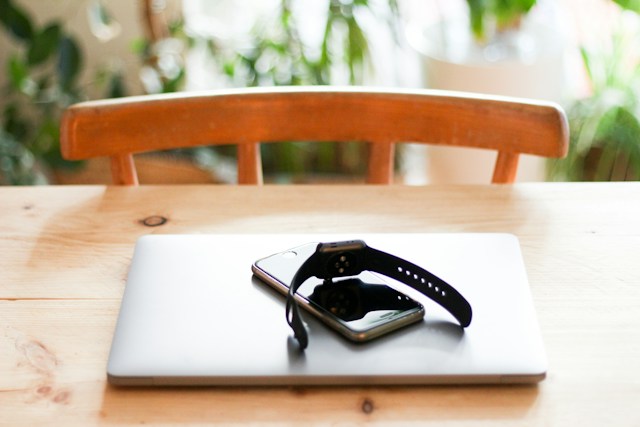
The Freedom of Being “Good Enough”
Perhaps the most interesting thing about anti-optimization is that it challenges a very modern assumption:
What if good enough is actually good enough?
Your sleep doesn’t have to be perfect.
Your diet doesn’t have to be perfect.
Your exercise routine doesn’t have to be perfect.
Your morning doesn’t have to be perfect.
You don’t have to wake up early, drink lemon water, meditate, journal, exercise, read ten pages, take six supplements and complete a cold plunge before 8 a.m. to have a healthy day.
Maybe you wake up late.
Maybe you drink ordinary coffee.
Maybe you take a walk.
Maybe you eat something delicious.
Maybe you spend an hour talking to someone you love.
Maybe you go to bed early.
And that’s your wellness routine.
There is a strange amount of freedom in realizing that you don’t have to turn every good habit into an identity.
A Simpler Wellness Check-In
If you feel overwhelmed by wellness advice, try replacing your usual list of metrics with a few simple questions.
How does my body feel today?
Not according to an app. You.
Do I need movement, rest, food, water or simply a change of scenery?
What has been making me feel better lately?
What has been making me feel worse?
Is there something I’m doing because it genuinely helps me, or because I feel I should?
And perhaps the most useful question:
Could I make my wellness routine simpler?
You may discover that the answer is yes.
Maybe you can stop tracking one thing.
Maybe you can remove a supplement you don’t actually need.
Maybe you can simplify your skincare routine.
Maybe you can stop treating every workout as a performance.
Maybe you can leave one part of your day completely unoptimized.
That’s not giving up on yourself.
It may simply be giving yourself some room to live.
What to Keep and What to Let Go
You don’t need to reject everything that modern wellness has brought us.
Keep the things that genuinely help.
Keep the walk that makes your head clearer.
Keep the strength training you enjoy.
Keep the moisturizer that works.
Keep the sleep schedule that makes you feel rested.
Keep the meditation if it actually calms you.
Keep your fitness tracker if you enjoy seeing the data.
But consider letting go of the things that have quietly become sources of guilt.
The step goal you dread.
The sleep score that determines your mood.
The supplement stack you can barely remember the purpose of.
The routine that takes two hours every morning.
The endless feeling that you’re always one improvement away from finally being healthy enough.
Wellness shouldn’t require you to constantly prove that you’re doing wellness correctly.
Maybe the Next Wellness Trend Is Just Living
The appeal of anti-optimization may be less about a particular trend and more about a cultural correction.
After years of biohacking, quantified-self culture and increasingly sophisticated wellness technology, it makes sense that some people are beginning to ask whether all this information is actually making everyday life better.
The answer will be different for different people.
For some, tracking is motivating and useful.
For others, it becomes stressful.
For some people, a detailed fitness plan provides structure.
For others, it turns exercise into another obligation.
There doesn’t need to be one correct relationship with wellness.
Maybe the most useful question isn’t “What is the optimal wellness routine?”
Maybe it’s:
“What helps me feel well without making my life revolve around feeling well?”
That is a much harder question to turn into an app.
And perhaps that’s exactly the point.